

What a Toilet Leak Sensor Can Save Your Property
A toilet leak you cannot see is still a toilet leak you are paying for.
Most toilet leaks are completely internal. The water does not pool on the floor or drip down a wall. It runs silently from the tank to the drain, around the clock, adding hundreds or thousands of dollars to your water bill every month. You will not notice it during a walkthrough. Your maintenance team will not catch it on a visual inspection. Your water bill will.
According to the Environmental Protection Agency, 1 in 10 toilets in the U.S. is currently leaking. In hotels, senior housing, and multifamily properties, that ratio is often higher. A small toilet leak wastes 860 gallons per month. A large one can waste 4,300 gallons per day.
The question most property owners are asking is not whether their toilets are leaking. It is how much those leaks are actually costing them, and whether a sensor is worth it.
Three real properties answered that question. Here is what they found.
The Real Cost of Doing Nothing
Silent toilet leaks are expensive precisely because they go undetected for so long.
Manual inspections are not a practical solution at scale. In a 100-room hotel or a 96-unit apartment building, checking every toilet regularly takes significant staff time and disrupts guests or residents. Most properties skip it entirely.
According to a Pacific Institute study on toilet leak detection in multifamily housing, 51% of toilet water was lost to leaks even after a leak detection program was implemented at affordable housing properties in Los Angeles. The study found an 11% reduction in overall water use and a 12% reduction in water and wastewater bill costs after proactive leak management was introduced.
That is the baseline. Now look at what happens when properties move faster and fix leaks immediately.
Case Study 1: Motel 6, Beaumont, Texas (120 Rooms)
This 120-room hotel installed the NextCentury Toilet Leak Sensor and gave their maintenance team real-time alerts for every leak detected.
The results:
Annual savings: $42,257
ROI: 275%
Payback timeline: Approximately 4 months
Property valuation lift (8 cap): $528,219
The hotel owner, Monik Patel, reported that the system notified his maintenance team of leaks as they occurred and tracked the number of gallons lost per event. That visibility alone drove a meaningful reduction in water and sewer costs.
At 120 rooms, the math is straightforward. A handful of leaking toilets running undetected for weeks adds up quickly. Catching them in real time changes that completely.
Case Study 2: Red Roof Inn, Mt. Holly, New Jersey (85 Rooms)
A smaller property, and an even sharper return.
The 85-room Red Roof Inn posted the strongest ROI of the three case studies, with results that reflect what happens when leaks are fixed immediately rather than discovered weeks later.
Annual savings: $56,607
ROI: 492%
Payback timeline: Approximately 2 months
Property valuation lift (8 cap): $707,718
Hotel owner Rich G. credited the leak alerts directly: properties that act on notifications immediately see faster and deeper savings than those that let alerts sit. The nearly 50% reduction in water and sewer costs at this property is the clearest evidence of that.
It is also worth noting that the 85-room property saved more annually than the 120-room property. Room count matters less than leak frequency and response speed.
Case Study 3: Evergreen Towers, Chicago, Illinois (Senior Community, 96 Units)
In January 2024, NextCentury partnered with UPholdings LLC, a Chicago-based property management company, to install 96 toilet leak sensors at a senior community property originally built in 1999.
Within weeks of installation, the sensors identified 35 leaking toilets, more than a third of the units. Every one of them was fixed.
Monthly water bill reduction: 43%
Annual savings per toilet: $435
Total monthly gallons saved: 329,000
Monthly gallons saved per toilet: 3,400+
Payback timeline: 3.5 months
Operations Manager Alexis Taylor described the results as significant enough that UPholdings ordered the system for six additional properties.
Older buildings tend to have higher leak rates. A property built in 1999 with aging fill valves, flappers, and supply lines is a high-risk environment for silent leaks. Sensor-based monitoring removes the guesswork entirely.
| Property | Type | Units / Rooms | Annual Savings | ROI | Payback Period |
|---|---|---|---|---|---|
| Motel 6 – Beaumont, TX | Hotel | 120 rooms | $42,257 | 275% | ~4 months |
| Red Roof Inn – Mt. Holly, NJ | Hotel | 85 rooms | $56,607 | 492% | ~2 months |
| Evergreen Towers – Chicago, IL | Senior Multifamily | 96 units | $41,760 est.* | N/A reported | 3.5 months |
*Evergreen Towers annual savings estimated from $435/toilet x 96 units per NextCentury case study data.
How the NextCentury Toilet Leak Sensor Works
The NextCentury Toilet Leak Sensor installs in minutes without a plumber. It sits between the toilet supply line and fill valve and monitors every flush, tracking how long the tank takes to refill. When the refill time exceeds the normal range, the sensor sends an alert directly to your maintenance team via app, email, or text.
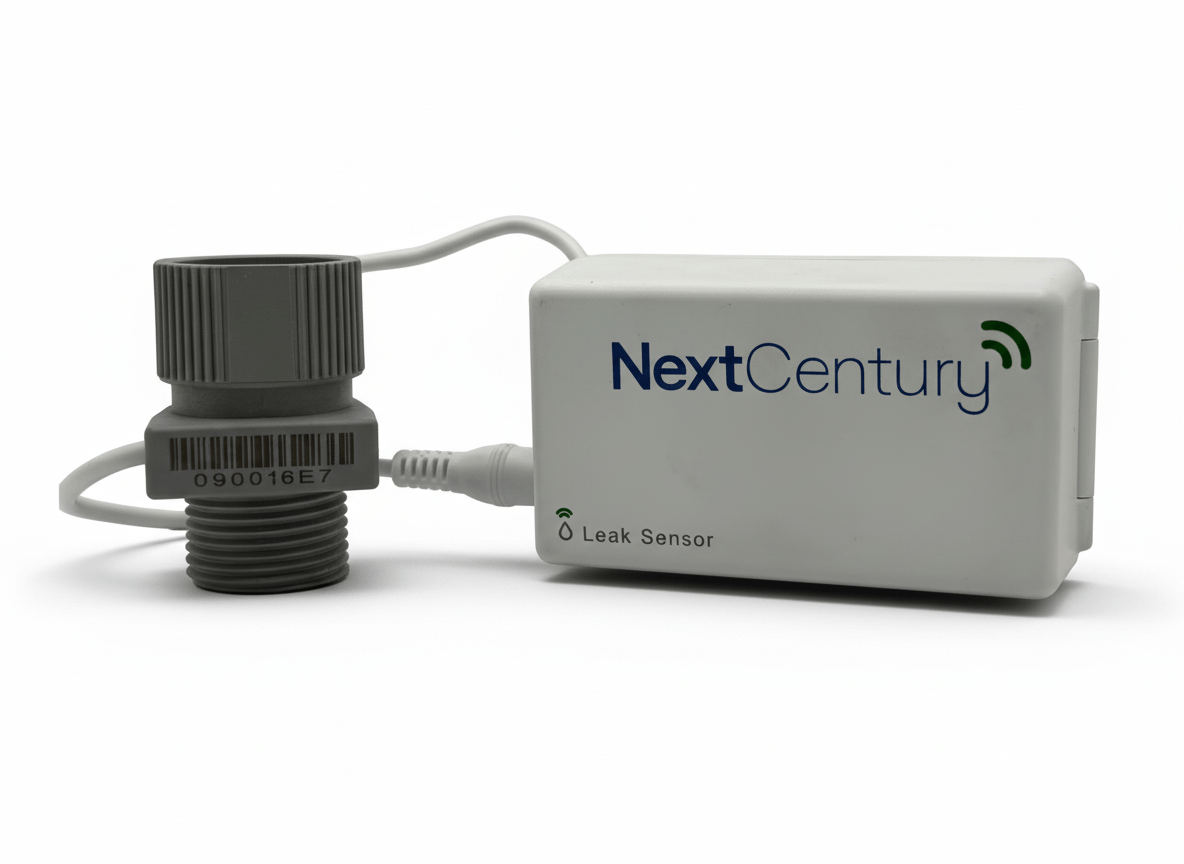
It detects all three common causes of toilet leaks: a leaking flapper seal, a stuck or faulty valve, and a kinked flapper chain. Most competing solutions address only one.
Key specs:
Detects leaks as low as 0.2 GPM
10-year replaceable battery life
Property-wide dashboard for managing alerts
3-year warranty with full backwards compatibility
Runs on a proven network of 3.5 million active devices across 23,000+ properties
Setup takes minutes per toilet. No downtime. No guest disruption. No plumber required.
Frequently Asked Questions
How much can a toilet leak sensor actually save a hotel? It depends on property size, leak frequency, and how quickly your team responds to alerts. Based on the case studies above, an 85-room hotel saved $56,607 per year with a 492% ROI and a 2-month payback period. A 120-room hotel saved $42,257 with a 275% ROI. Both properties saw payback in under 4 months.
How do toilet leak sensors work in hotels and multifamily buildings? The sensor installs between the toilet supply line and fill valve. It monitors each flush cycle and measures how long the tank takes to refill. If the refill runs longer than normal, it flags a leak and sends a real-time alert to your maintenance team. No manual inspection needed.
What types of toilet leaks does the sensor detect? The NextCentury Toilet Leak Sensor detects all three common causes: a leaking flapper seal, a stuck or faulty valve, and a kinked flapper chain. Most other solutions on the market are built to catch only one of these failure types.
How long does installation take? Each sensor installs in roughly 2 to 3 minutes per toilet with no plumbing experience required. A 96-unit property can typically be fully equipped in a single day.
Does a leaking toilet actually affect property value? Yes, through its impact on net operating income (NOI). At an 8 cap rate, the Motel 6 savings of $42,257 per year translated to a $528,219 increase in property valuation. The Red Roof Inn's $56,607 in savings produced a $707,718 valuation lift. Reducing operating costs directly increases what a property is worth.
Stop Paying for Water You Are Not Using
Every month a leaking toilet goes undetected is another month of avoidable cost. The three properties above did not do anything complicated. They installed sensors, acted on alerts, and reduced their water bills by up to 50%.
If you manage a hotel, a multifamily community, or a senior living property, the numbers make the case on their own.
See how much your property could save. Contact Integrity Meter Solutions today to get a quote on the NextCentury Toilet Leak Sensor.