

What Is Automated Meter Reading (AMR) and Why Does It Matter?
Managing utilities across multifamily properties, apartment communities, and commercial buildings can quickly become complex. Traditionally, collecting data from every water meter or electric meter required staff to physically access each unit and record readings manually. As properties grow and utility systems become more sophisticated, this process can become inefficient and prone to error.
Automated Meter Reading (AMR) offers a smarter approach. By using wireless communication technology, an automated meter reading system collects data from meters and transmits that information for monitoring and billing. In this article, we’ll explain what Automated Meter Reading is, how AMR systems work, and why they have become an important part of modern submeter solutions. We’ll also explore how communication devices like the NextCentury GW4 5G Cellular Gateway help make reliable AMR systems possible.
Understanding Automated Meter Reading
Automated Meter Reading is a system that electronically collects usage data from meters and sends that information to a central location. Instead of physically inspecting every water meter or electric meter, AMR systems gather readings automatically using wireless transmitters and communication devices.
These systems are commonly used in properties that rely on water submeters or electric submeters to measure individual tenant usage. Because readings are transmitted automatically, property managers and billing companies can access usage data more quickly and consistently.
As utility monitoring technology continues to evolve, AMR systems are becoming a key component of modern water metering and submetering solutions used in multifamily housing, commercial buildings, and other large properties.
How Automated Meter Reading Systems Work
An automated meter reading system typically relies on three key components working together.
First, meters measure utility consumption within each unit or building. This may include water meters, electric submeters, or other utility monitoring devices.
Next, wireless transmitters collect the readings from the meters and send that information electronically. These transmitters eliminate the need for manual readings while maintaining accurate usage data.
Finally, a gateway device gathers signals from transmitters throughout the property and sends the data to a monitoring or billing platform. This gateway acts as the central communication hub that allows readings to be collected remotely.
By combining these technologies, property managers can monitor dozens or even hundreds of meters across a single property without needing to physically access each one.
Types of Meters Used in AMR Systems
Automated Meter Reading systems rely on a variety of meter technologies depending on the needs of the property. The most common systems monitor water and electricity usage across individual units.
Many multifamily properties use water submeters to measure consumption for each apartment or tenant. These meters allow property owners to bill residents based on actual usage rather than allocating costs evenly across the building.
In some systems, more advanced technology such as an ultrasonic water meter or ultrasonic flow meter may be used. These meters measure water flow using sound waves rather than mechanical moving parts, which can improve accuracy and reduce long-term wear.
Properties that monitor electricity usage often rely on electric submeters, which track energy consumption at the unit level. When integrated into an automated meter reading system, these meters can send usage data automatically through wireless transmitters and communication gateways.
Together, these different meter technologies provide the data that AMR systems collect and transmit.
Why Automated Meter Reading Matters for Property Managers
For property managers and building owners, automated meter reading provides several operational advantages.
One of the most immediate benefits is efficiency. Instead of sending staff to check each water meter or electric submeter, AMR systems collect readings automatically. This significantly reduces the time and labor required to monitor utilities across large properties.
Automated readings also improve accuracy. Manual meter readings can sometimes lead to recording errors or missed readings. With an automated meter reading system, usage data is captured consistently and delivered electronically.
Access to real-time or regularly updated meter data can also help property managers identify unusual usage patterns. In systems that support water leak detection meters, this visibility can help identify potential leaks or abnormal consumption earlier.
A Key Technology Behind Modern AMR Systems
Behind every reliable AMR network is communication hardware that gathers and transmits meter data across the property. One example of this technology is the NextCentury GW4 5G Cellular Gateway.
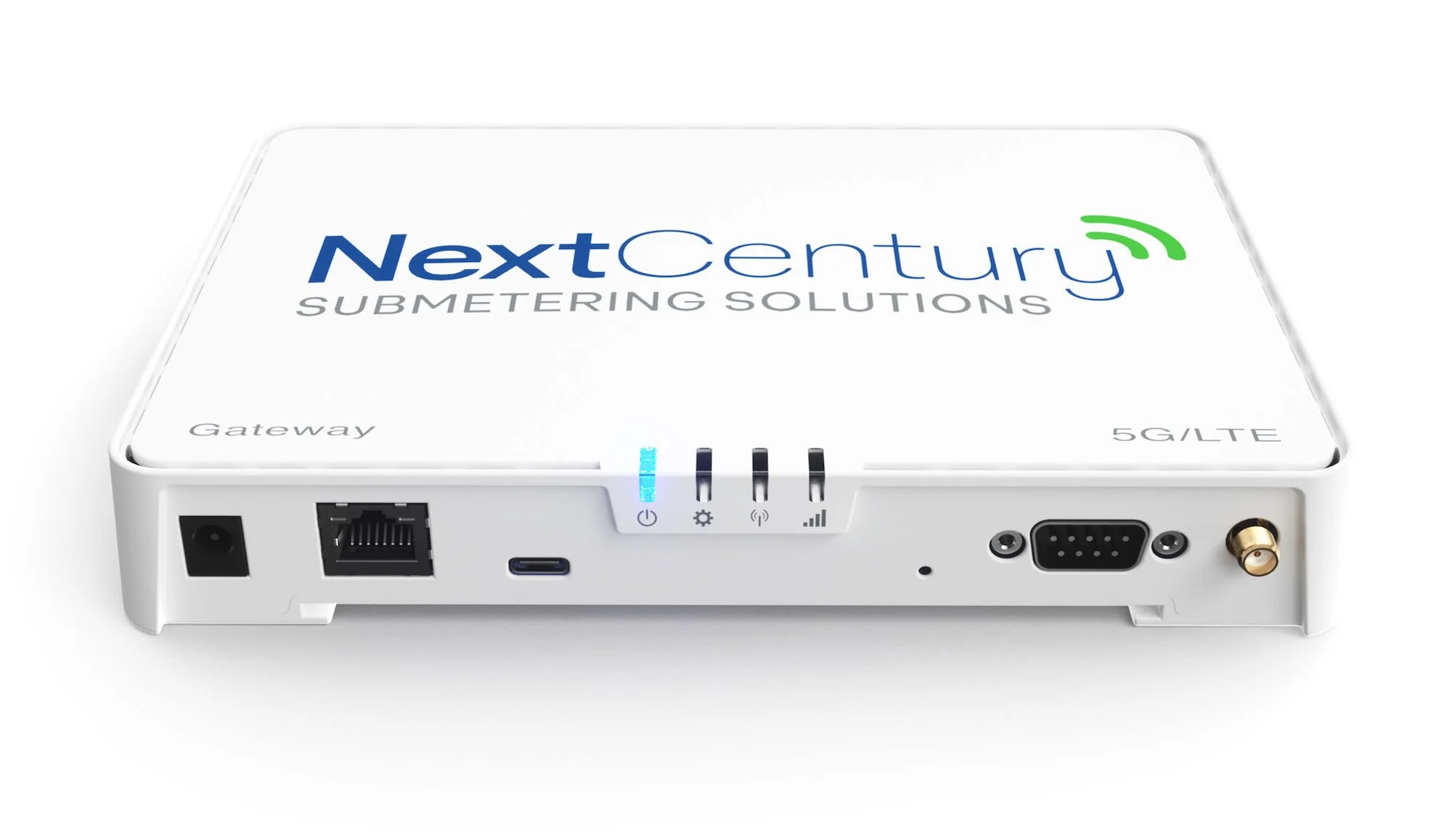
The NextCentury 5G Cellular Gateway introduces the next generation of superior wireless utility management. Designed with a simple plug-n-play setup, the device can facilitate communication for thousands of wireless devices on a single property.
Acting as the central hub of an automated meter reading system, the gateway collects signals from transmitters connected to meters throughout the building. The device then securely sends that information to the cloud, allowing meter readings to be accessed remotely.
The gateway can easily connect to the internet using ethernet, WiFi, or built-in 5G cellular, providing flexible deployment options for different property environments. Because of this connectivity, property managers can collect meter data without relying on existing building network infrastructure.
Communication devices like the NextCentury GW4 gateway play a critical role in making modern submeter solutions scalable and reliable across large multifamily properties.
The Future of Utility Monitoring
As buildings continue adopting smarter technologies, automated meter reading is becoming a standard part of modern utility management. The ability to automatically collect and analyze data from water meters and electric submeters helps streamline billing, improve accuracy, and reduce operational workload.
Modern AMR systems combine advanced meters, wireless transmitters, and communication gateways to manage utility data across entire properties. Whether monitoring water submeters, electric submeters, or other utility devices, automated systems provide property managers with a more efficient way to track consumption.
For multifamily properties and commercial buildings looking to modernize their utility monitoring infrastructure, Automated Meter Reading offers a reliable path toward more efficient and scalable utility management.
Explore Automated Meter Reading Solutions
Interested in building or upgrading an automated meter reading system? Integrity Meter Solutions offers a range of AMR-compatible products including wireless transmitters, gateways, and submetering technology designed for multifamily and commercial properties.
Explore our selection of Automated Meter Reading products to find the right solution for your system.
Integrity Meter Solutions provides advanced submetering equipment and wireless communication technology for multifamily and commercial properties. From water submeters and electric submeters to gateways and transmitters, IMS helps property managers implement reliable automated meter reading systems and modern utility monitoring solutions.